
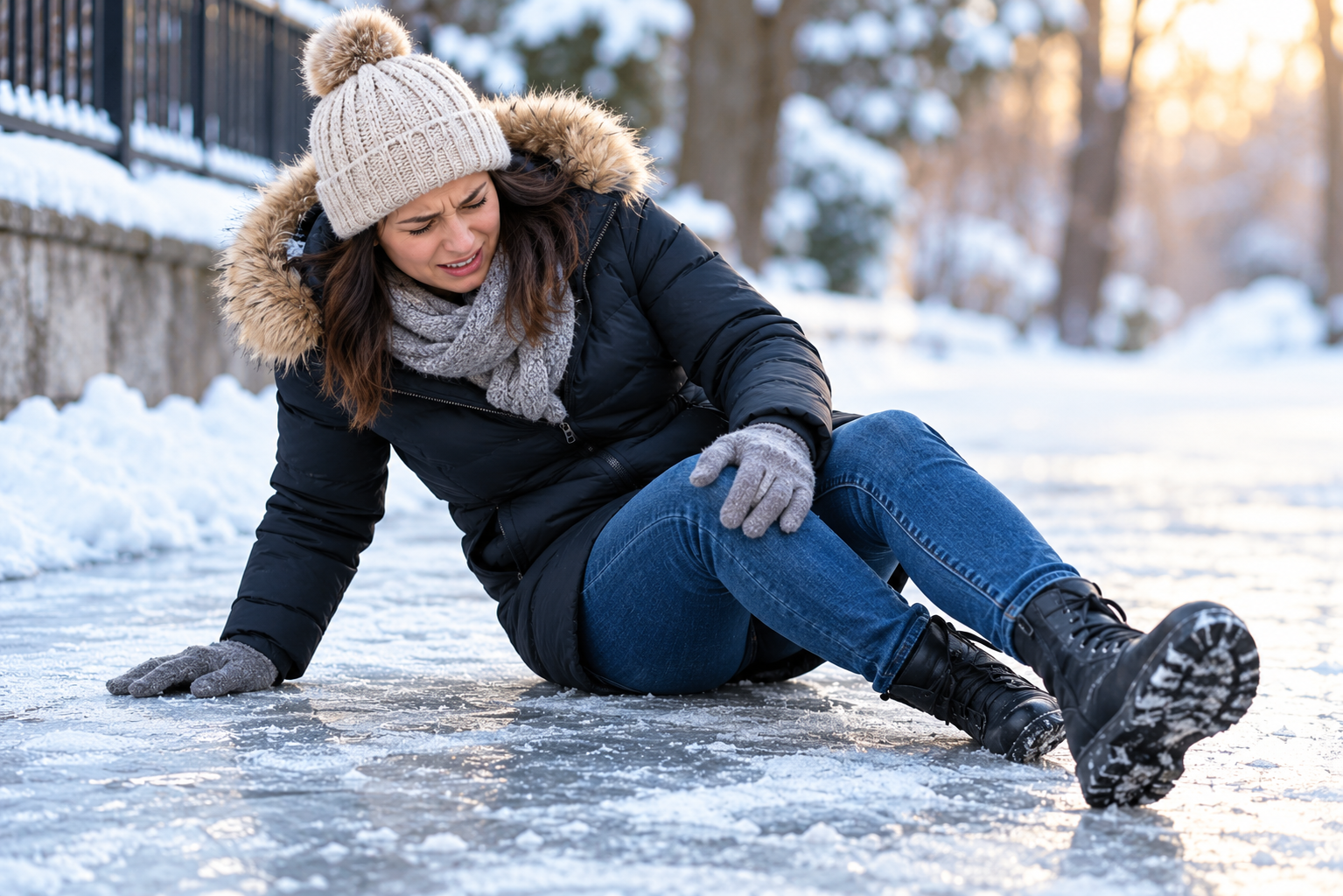
What should I do immediately after falling on ice? Falling on ice is common in Canada during the winter. When you fall, it could result in anything from a slight bruise, a pulled muscle, a sprained ankle, a broken bone, a back injury, or even a head injury. Although you may seem fine at first, you could experience other symptoms several hours after the fall. When you slip on ice, it is important to know how to respond to the incident right away; to identify potential problems, and determine whether or not you should seek help from a doctor. After falling on ice, what do I need to do right away? 1) Stay Still and Assess Your Body Slowly Do not stand up right away; take some time to assess how you feel in your body first before you try to stand up. Look for: Sharp or severe pain Dizziness or confusion Numbness or tingling Weakness Neck or back pain Difficulty moving an arm or leg Pain when trying to put weight on your leg If you are feeling faint, disoriented, or badly hurt, do not attempt to get off the floor by yourself; find another person to assist you. 2) Pay Attention to Any Serious Warning Signs. The need for immediate medical treatment is greater than the need for physical therapy when certain types of injuries occur. Seek emergency medical care if you: Hit your head and develop concerning symptoms Heard a pop or snap at the time of the fall Have severe or rapidly increasing pain Cannot stand or walk normally Have an obvious deformity Experience significant numbness or weakness Develop confusion or vision changes Lose consciousness or develop severe headache or vomiting after a head injury Do not attempt to walk on a possible serious injury. 3) Move to a Safe, Warm Place If You Can When you are able to walk easily and do not experience any other symptoms of a severe injury, slowly get off the ice. Ask for help from someone if required. After being in a warm, dry area, spend additional time evaluating your symptoms. If you can’t get back on your feet without danger of falling again, then don’t try to get up. Instead, stay exactly as you are until someone comes to assist you. 4) What Can I Do for a Minor Injury? Minor strains/sprains may benefit from protecting the area of injury as well as avoiding physical activity which results in increased levels of discomfort. A popular method of treating injuries is the RICE method. Rest: Avoid physical activity or actions that cause you to feel worse than before.Lorem ipsum dolor sit amet, consectetur adipiscing elit. Ut elit tellus, luctus nec ullamcorper mattis, pulvinar dapibus leo. Ice: Wrap an ice pack in a towel and apply it for approximately fifteen to twenty minutes per application. Do not use the ice directly against your skin. Compression – A compression bandage could assist in reducing swelling associated with many types of limb injury as long as there is no increase in pain, numbness or color change. Elevation: It is recommended that you elevate your injured arm or leg when possible, to assist in controlling the swelling. Speak with a healthcare professional if you’re not sure how much of what we’ve listed will help with your injury. 5) Continuously Monitor Your Symptoms If you feel fine right away after a fall, this doesn’t necessarily indicate that you didn’t sustain an injury. It is possible for the pain, swelling, stiff joints, and/or discoloration (bruising) to develop into a much larger problem over time. Pay attention to changes in your ability to walk, move a joint or perform normal activities. An assessment of persistent or worsening symptoms must be conducted by a qualified healthcare provider. 6) Document Where the Fall Occurred. If the fall happened in front of your home, on a sidewalk, in a parking lot, on a commercial property, etc., take pictures of the ice/slip condition as long as it’s safe to do so. Record when and where the fall happened and, if possible, note what caused you to slip. This information can be useful when reporting the incident. When is it appropriate to go to a physiotherapist after falling on ice? When you are in continued discomfort; limited range of motion, reduced strength, decreased mobility, or difficulty resuming everyday activities following an injury from a fall, you should consider having a physical therapy evaluation. Physiotherapists can assess how you move and function; determine where the injury has caused damage to your body; and create a rehabilitation program specifically for you that takes into consideration what you want to achieve with respect to recovering from the injury. However, possible broken bones, serious brain damage, major nerve problems and/or any other life-threatening medical emergency should be evaluated by a healthcare professional prior to using this product. Frequently Asked Questions Can I walk after slipping on ice? If you can walk without significant pain or instability, you may be able to move to a safe location. If you cannot bear weight or walking causes severe pain, seek medical assessment. Should I use ice after falling? A cold pack wrapped in a towel may help manage pain and swelling associated with some minor injuries. Avoid placing ice directly against your skin. Can an injury appear hours after a fall? Yes. Some symptoms, including pain, stiffness and swelling, may become more noticeable after the initial fall. Continue monitoring your condition. How can I prevent another fall on ice? Wear footwear with good traction, take shorter steps, avoid rushing and use handrails where available. Balance, strength and mobility exercises may also help reduce fall risk. Can physiotherapy help after a winter fall? Physiotherapy may help with ongoing pain, stiffness, reduced mobility, weakness and difficulties returning to normal activities after an injury. The appropriate treatment depends on the type and severity of the injury. If you have slipped and fallen on ice and your symptoms are not improving,