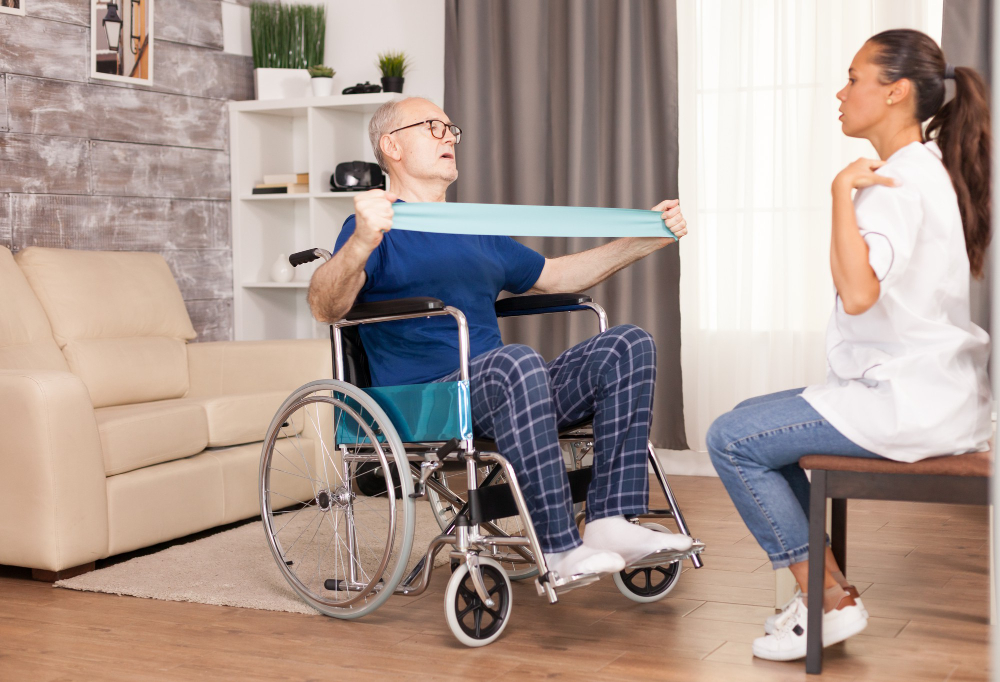
Recovering from a stroke can be one of the most challenging journeys for both patients and their families. While every stroke is unique, one thing remains constant: early rehabilitation and proper management significantly improve recovery and long-term independence.
At Movement Rehab Physiotherapy and Manual Therapy Clinic, we provide evidence-based neurological rehabilitation focused on restoring movement, preventing complications, and helping individuals regain confidence in their daily lives.
A stroke occurs when the blood supply to part of the brain is interrupted, depriving brain cells of oxygen. This can happen due to:
Depending on the area of the brain affected, a stroke may cause:
Recovery does not happen overnight. Most people progress through predictable stages, although the timeline varies for each individual.
Immediately after a stroke, muscles often become flaccid, meaning they are soft, weak, and unable to contract effectively.
During this stage patients commonly experience:
This is when proper positioning is most important.
When muscles cannot support the limbs, gravity begins pulling joints into poor positions.
Examples include:
Shoulder
The arm hangs downward because the shoulder muscles cannot support its weight, increasing the risk of:
Wrist and Hand
The wrist bends downward while the fingers curl into the palm.
Without stretching and positioning, the hand gradually becomes difficult to open.
Hip
The weak leg often rolls outward while lying in bed, affecting alignment and walking later.
Knee
The knee may remain bent for prolonged periods, gradually reducing extension.
Ankle
The ankle naturally falls into a pointed position because gravity and calf muscles overpower the weak muscles that lift the foot.
This leads to foot drop.
Good positioning helps:
Positioning should be maintained:
Even small adjustments made throughout the day can prevent long-term complications.
One of the biggest challenges after stroke is the development of contractures.
A contracture occurs when muscles, tendons, ligaments, and surrounding tissues become permanently shortened due to prolonged immobility.
Contractures commonly develop in:
Once established, contractures can:
The best treatment for contractures is prevention.
An effective prevention program includes:
Consistency is far more important than intensity.
Foot drop occurs because the muscles that lift the foot become weak or lose coordination.
Signs include:
Without treatment, walking becomes inefficient and unsafe.
Treatment may include:
Task-specific walking practice
As the brain begins recovering, many patients transition from flaccidity to spasticity, where muscles become stiff and overactive.
Common patterns include:
Upper Limb
Lower Limb
Spasticity can interfere with:
Physiotherapy, stretching, splinting, medications, and, in some cases, botulinum toxin injections can help manage spasticity.
Splints are used to maintain joints in a functional position while muscles recover.
Hand Splints
Help:
Wrist Splints
Help:
Ankle-Foot Orthoses (AFOs)
Help:
Night Splints
Help maintain muscle length while sleeping and reduce morning stiffness.
Splints should always be individually prescribed and regularly reviewed to ensure proper fit and skin protection.
Physiotherapists use standardized outcome measures to monitor recovery and guide treatment.
Brunnstrom Stages of Recovery
Describes progression from flaccidity to coordinated movement.
Fugl-Meyer Assessment
Considered one of the gold-standard measures for motor recovery following stroke.
Measures:
Modified Ashworth Scale
Measures muscle tone and spasticity.
Berg Balance Scale
Assesses static and dynamic balance and helps determine fall risk.
Timed Up and Go (TUG)
Measures mobility, transfers, walking, and balance.
10-Metre Walk Test
Measures walking speed and predicts community mobility.
Six-Minute Walk Test
Measures endurance and walking capacity.
Functional Independence Measure (FIM)
Evaluates independence with:
Stroke Impact Scale
Assesses the effect of stroke on physical function, communication, memory, emotion, participation, and overall quality of life.
The brain has an incredible ability known as neuroplasticity, allowing healthy brain areas to form new connections and take over some lost functions.
Neuroplasticity is enhanced by:
Recovery often continues for months and even years after a stroke.
Research consistently shows that starting rehabilitation early can:
At Movement Rehab Physiotherapy and Manual Therapy Clinic in Brampton, we provide personalized neurological rehabilitation tailored to each patient’s goals and abilities.
Our services include:
Begin Rehabilitation Early
Every day after a stroke presents an opportunity for recovery. Early assessment, proper positioning, contracture prevention, gait training, and individualized physiotherapy can make a lasting difference in restoring movement and independence.
If you or a loved one is recovering from a stroke, our experienced physiotherapy team is here to help. Contact Movement Rehab Physiotherapy and Manual Therapy Clinic in Brampton to schedule a comprehensive neurological assessment and begin a personalized rehabilitation program focused on achieving the best possible recovery.
Yes. Although recovery is often fastest during the first few months, meaningful improvements can continue for years with consistent rehabilitation.
Mild contractures may improve with stretching, splinting, and therapy. Severe contractures are much harder to treat, making prevention essential.
Not always. Many patients improve with physiotherapy, strengthening, gait training, electrical stimulation, or an ankle-foot orthosis (AFO).
No. Splinting is recommended based on individual assessment, muscle tone, joint position, skin integrity, and functional goals.
© 2025 Created with Syntax Digital
